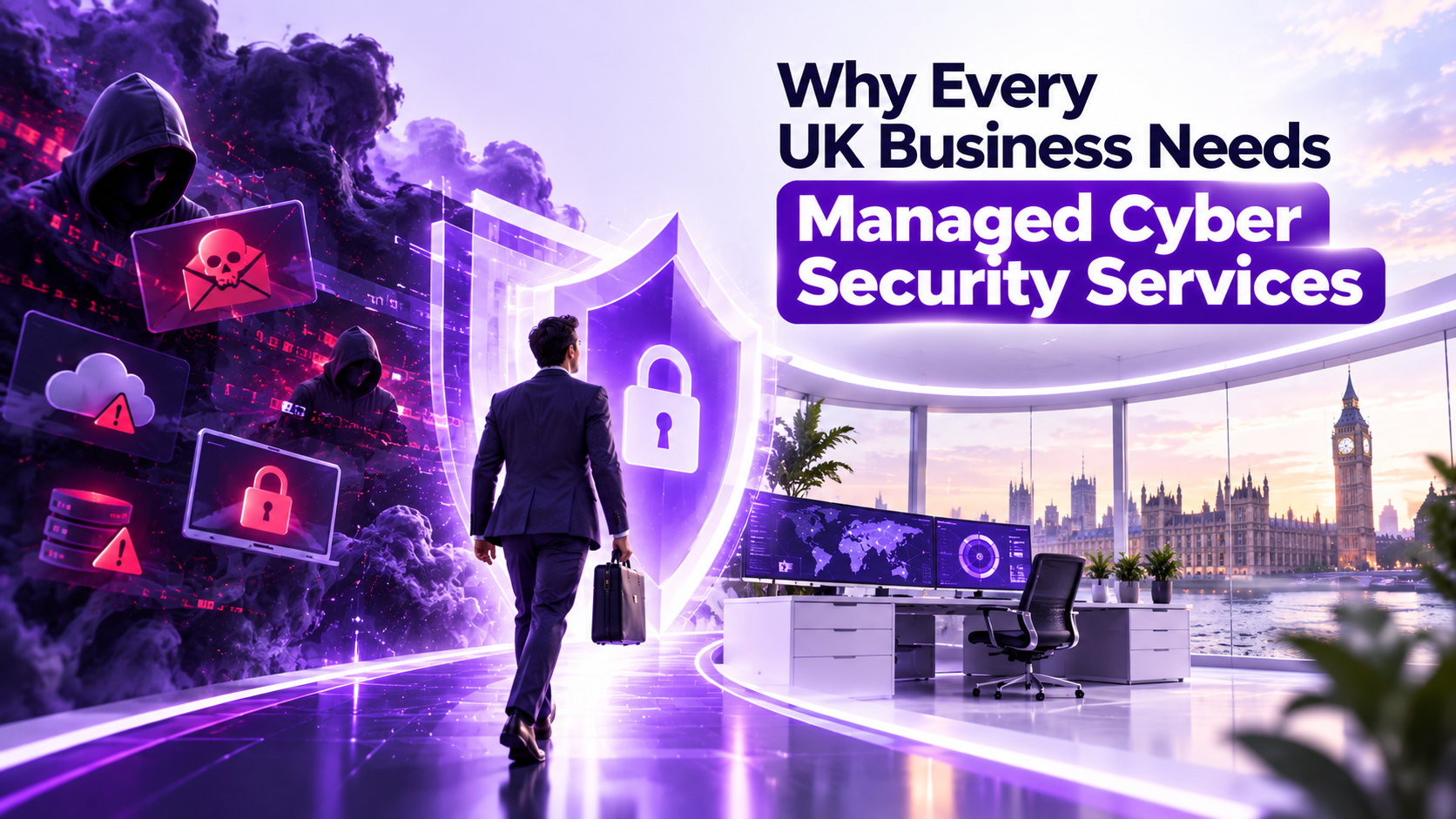
Staying on top of cybersecurity isn’t getting any easier for UK businesses. Companies run cloud platforms, let people work from anywhere, rely on SaaS apps, and trust third-party suppliers. With all that, the risks just keep piling up. Attackers aren’t standing still either—phishing, ransomware, and account takeovers keep finding new ways in.
According to the Cyber Security Breaches Survey 2025/2026, 43% of UK businesses faced a cyber breach or attack in the last year. For medium-sized businesses, that jumps to 65%, and for big companies, it’s almost seven out of ten! With risks growing, more businesses are turning to Managed Cyber Security Services UK. It is a way to bring in real expertise, get round-the-clock monitoring, and react faster when something goes wrong without building a big security team from scratch.
Key Points You Should Know
- Cyber threats are a real and constant risk for UK organisations.
- Most in-house IT teams don’t have the resources to watch everything 24/7.
- Managed Security Services offer direct access to seasoned cybersecurity pros.
- With 24/7 monitoring, threats get caught faster and responses happen quicker.
- Don’t rush into outsourcing critical security—make sure you truly vet your provider.
Why Are UK Businesses Ramping Up Cybersecurity Spending?
Cybersecurity isn’t just “an IT problem” anymore. A single attack can stop your business in its tracks, leak sensitive customer data, upset your clients, and land you in regulatory hot water. The government data makes it clear: larger organisations face cyber attacks and breaches at especially high rates. Protection is complicated because staff work remotely, applications run across different clouds, and business processes depend on outside partners.
Setting up your own full-scale internal security operation to watch all of this is tough, especially for growing SMEs. In-house teams are expected to cover monitoring, vulnerability management, threat intelligence, and 24/7 availability. It adds up fast in both headcount and technology costs. That is why smart companies are outsourcing to Managed Security Services to bring in specialized help without reinventing the wheel internally.
Still, handing over your security does not mean you can just switch off. The National Cyber Security Centre (NCSC) always warns: do your homework before you partner, because any MSP you pick will get access to serious parts of your business systems.
What Do Managed Cyber Security Services Really Offer?
It depends on the provider, but here is what you usually get from an enterprise-grade managed security provider:
24/7 Security Monitoring
Track telemetry and security events nonstop across your network, cloud, and endpoints.
Threat Detection & Intelligence
Spot suspicious behaviour fast with actionable global insights on emerging exploits and zero-days.
Incident Response
Rapid investigation, host containment, and forensic recovery to stop attacker lateral movement.
Vulnerability Management
Find and prioritize weaknesses across servers, apps, and perimeter systems before attackers exploit them.
Security Operations Centre (SOC)
Dedicated security analysts focused solely on validating real incidents and neutralizing alert fatigue.
Cloud Security Monitoring
Continuous posture visibility and configuration tracking across AWS, Azure, GCP, and SaaS stacks.
Executive Security Reporting
Clear, audit-ready summaries for leadership that translate telemetry into business risk decisions.
What you want is real analysis and the ability to sort out what matters—not just lots of automated alerts. The best providers get to the heart of the problem and help you act quickly, not just dump noisy raw data in your lap.
Why You Need 24/7 Security Monitoring
Cyber criminals don’t clock out for the weekend, and attacks can strike at any hour. If you get a suspicious privileged login at 2 a.m. on a Sunday, you need someone to catch and isolate it immediately, not wait until Monday morning when entire databases could already be encrypted or exfiltrated.
If you don’t have a dedicated internal Security Operations Centre (SOC), 24/7 managed monitoring makes a crucial difference. Fast detection leads to faster response, which helps you limit the blast radius when something goes wrong. Good managed security isn’t just about watching dashboards; the right provider should lay out exactly how incidents get escalated, SLAs for response, and who is responsible during a real emergency.
Managed Security Helps With Compliance and Resilience
Staying compliant and resilient go hand in hand. Managed security gives you technical controls and experienced practitioners who handle key areas like vulnerability remediation, ongoing security monitoring, incident detection, and audit readiness for security accreditations.
Don’t forget the essentials, like Cyber Essentials and Cyber Essentials Plus. This UK government-backed programme helps you defend against the vast majority of common cyberattacks. Managed services should fit into your overall security strategy and support this—not replace your wider governance and risk management approach.
How To Choose a Managed Security Provider
Not all providers are built the same. The NCSC advises organizations to take their time and evaluate providers early—not in a frantic panic after an adversary has already breached systems.
Before handing over keys to your environment, evaluate these critical questions:
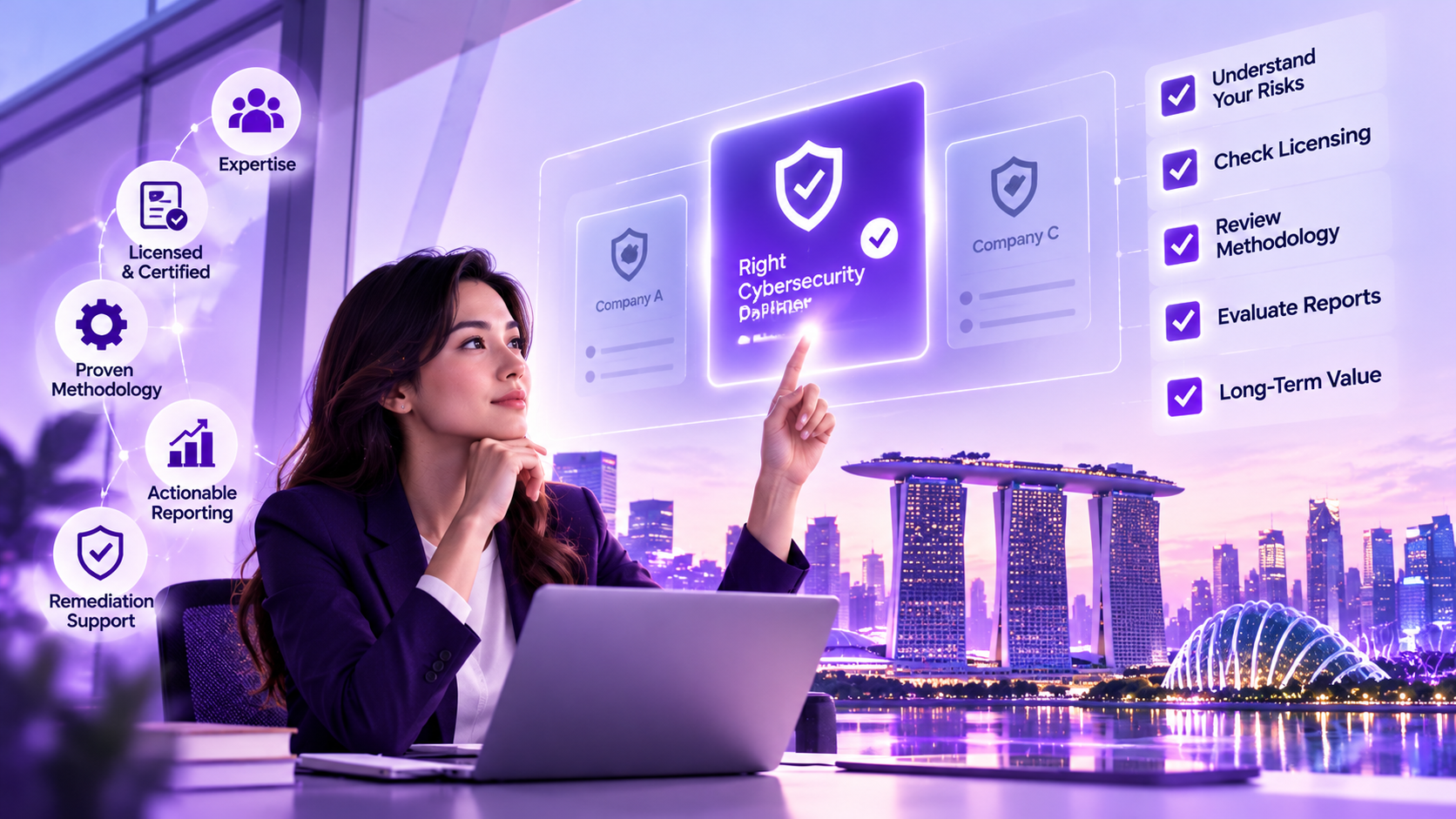
- Proven Talent: Do they have certified cybersecurity analysts and engineers (OSCP, CEH, CISSP, CISA) on staff?
- True 24/7 Capability: Will you get real round-the-clock monitoring and forensic investigation, or just automated email tickets?
- Response Protocol: When something serious happens, what is their SLA to contain and eradicate the threat?
- Executive & Technical Reporting: Will management receive clear, actionable risk reporting rather than confusing technical jargon?
- Governance & SLAs: Are all roles, access permissions, escalation paths, and service level agreements legally spelled out?
- Scalability: Can they scale protection as your business expands across new branches, clouds, or remote teams?
A Simple 5-Step Plan and Readiness Checklist
Use this structured 5-step approach to implement managed security smoothly for your UK business:
- Assess: Catalog critical infrastructure, sensitive customer data, existing security controls, and regulatory requirements.
- Define: Determine exactly what assets need monitoring, define alert thresholds, and establish incident escalation pathways.
- Evaluate: Vet MSP and MSSP candidates based on verified expertise, SOC capabilities, SLA commitments, and customer references.
- Implement: Configure secure sensor telemetry, access controls, communication bridges, and response protocols.
- Improve: Review security metrics continuously, refine playbooks, and update defenses as attacker techniques evolve.
Is Your Business Ready? Take This Quick Checklist:
- Have you identified your vital business assets and assessed cyber risks?
- Run regular vulnerability checks and reviewed cloud configurations?
- Documented an incident response plan and given staff phishing awareness training?
- Evaluated third-party supply chain risks and reviewed Cyber Essentials requirements?
- Conducted thorough due diligence on your security managed service provider?
Missing several items from this list? It’s likely time for a dedicated managed security review.
How Lumiverse Solutions Can Help
At Lumiverse Solutions Pvt. Ltd., our mission is to empower organisations with resilient security operations, tailored managed defense, and certified cybersecurity consulting. We support UK enterprises and high-growth SMEs with:
- Managed Security Services & 24/7 SOC Monitoring: Constant vigilance, telemetry correlation, and rapid incident response.
- Vulnerability Assessment & Penetration Testing (VAPT): Hands-on exploitation testing across networks, mobile apps, and systems.
- Web & API Security Testing: In-depth OWASP testing to protect digital banking, SaaS, and web APIs.
- Cloud & Network Security Assessments: Hardening Azure, AWS, and hybrid corporate networks against misconfigurations.
- Red Team Exercises & Phishing Simulations: Real-world adversary emulation to test employee readiness and detection posture.
- Incident Response & Threat Intelligence: Rapid forensic containment and actionable threat feeds.
- Third-Party Risk Management (TPRM): Continuous auditing of vendor access and external supply-chain exposure.
- ISO 27001, SOC 2, and Cyber Essentials Consulting: Complete audit preparation and gap remediation.
We prioritize tracking down real-world business risks, giving leadership full visibility, and fixing what truly matters to make your security posture demonstrably stronger.
Conclusion
UK businesses are doubling down on managed cybersecurity because the digital landscape demands proactive vigilance. The convergence of targeted ransomware, distributed workforces, multi-cloud architectures, and vendor supply chain complexity means your attack surface is constantly growing.
With managed cybersecurity services, you gain round-the-clock monitoring, deep practitioner expertise, faster threat eradication, and peace of mind without burning out your internal staff. Carefully evaluate prospective providers on their verifiable track record, SOC infrastructure, SLA commitments, and ability to grow alongside your organization.
Ready to strengthen your UK business defenses?
Reach out to our cybersecurity experts today to assess your security posture and design a managed defense plan tailored to your business needs.
Frequently Asked Questions (FAQs)
1. Why are UK businesses investing in Managed Cyber Security Services?
They want expert support, real 24/7 monitoring, faster threat detection, and less pressure on internal IT teams to handle constant, evolving digital threats.
2. What are Managed Security Services UK?
These services handle live security monitoring, threat detection, investigation, vulnerability management, and incident response, all provided by a dedicated, expert third party.
3. Are Managed Security Services suitable for SMEs?
Absolutely. SMEs get full-scale cybersecurity skills and 24/7 monitoring without having to spend massive amounts to hire and train a big internal security team.
4. What should businesses check before choosing an MSP?
You must check their cyber expertise, security controls, access levels, monitoring tools, incident response process, contracts, and exactly how they manage supply-chain risks.
5. Can managed cybersecurity help with Cyber Essentials?
Managed security can definitely support your Cyber Essentials technical controls, but you still need to meet all specific requirements and pass the assessment yourself.