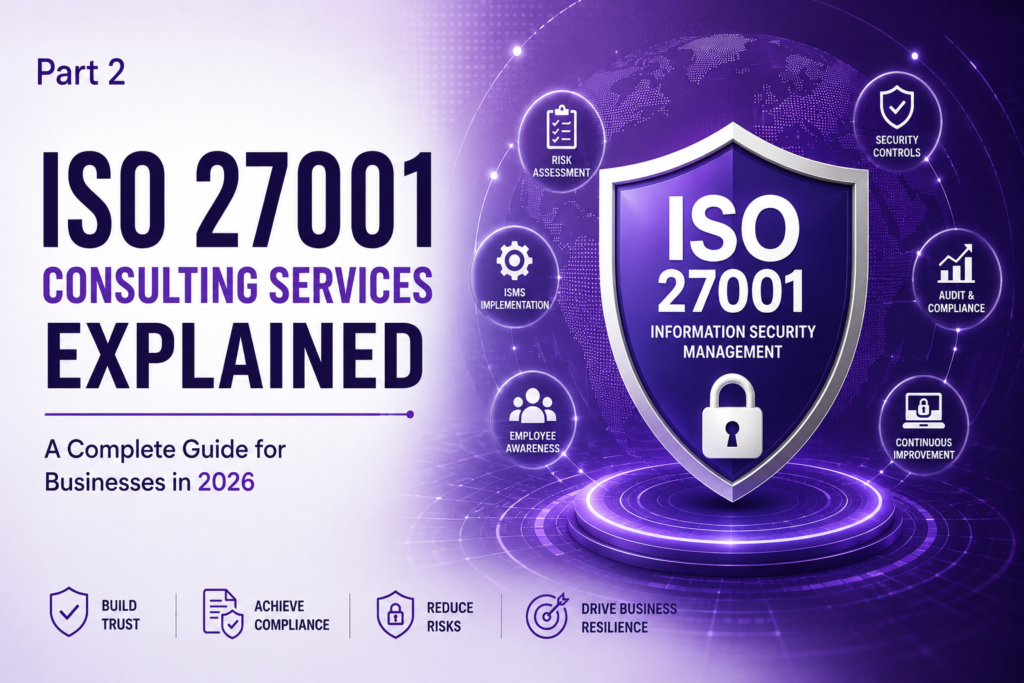
Achieving ISO 27001 certification isn't just about preparing a pile of documents for an external audit. It requires a structured approach that actually lines up your information security with your business goals and regulatory rules. Many people think that once they get certified, their cybersecurity is perfectly complete. But that’s a big misconception!
ISO 27001 sets up a management framework, and its real power comes from how well you continually monitor risks and train your team over time. In this guide, we will break down everything you need to know about ISO 27001 consulting services. You will learn the practical steps to build your Information Security Management System (ISMS), best practices for success, and how expert guidance can simplify your journey to long-term business resilience in 2026.
How Lumiverse Solutions Simplifies Implementation
At Lumiverse Solutions, our consulting approach focuses on building a practical Information Security Management System (ISMS). We want to support your long-term business resilience, not just help you pass a short-term compliance check.
Rather than handing you generic templates, we help you put controls in place that fit your actual industry and business risks. Our core ISO 27001 consulting services cover everything you need, including:
A Practical 5-Step Implementation Framework
People often ask where to begin. Based on our consulting experience, this five-step framework simplifies the process and prevents unnecessary delays.
Assess Your Current Security Maturity
Start with a comprehensive Gap Assessment to evaluate your current policies, information assets, infrastructure, and business processes. This highlights your priorities before you spend time and money.
Build Your ISMS
This is your foundation. You need to define your ISMS scope, identify interested parties, create policies, and assign ownership.
Perform Risk Assessment and Treatment
Since ISO 27001 is risk-based, evaluate your threats, vulnerabilities, and business impacts. The goal isn't to eliminate every single risk, but to reduce them to an acceptable level based on your priorities. Leveraging professional cybersecurity risk assessment techniques ensures accuracy in this step.
Implement Security Controls
Put the right controls in place based on your actual risks. This might include multi-factor authentication, backups, encryption, incident response planning, and vendor security checks.
Validate and Prepare for Certification
Run an internal audit and a management review before the official external audit. This proves your ISMS functions effectively and shows continual improvement.
What Most Organizations Overlook
Many organizations assume that grabbing that ISO 27001 certificate means they have achieved complete cybersecurity. This is one of the biggest misconceptions out there.
ISO 27001 is a brilliant framework for protecting information, but it only works if you keep monitoring risks, updating controls, and responding to new threats. Certification should always be viewed as the start of a long-term security journey, not the finish line. Implementing additional protocols, such as API Security Testing or Cloud Security Assessments, can significantly bolster this journey for modern infrastructures.
Best Practices for Successful Certification
Companies that succeed with ISO 27001 usually follow a few core habits. They secure top management commitment from day one, maintain an accurate inventory of their information assets, and conduct regular risk assessments.
On top of that, successful organizations also:
Policy Reviews
Review and update security policies periodically to match evolving business needs.
Employee Training
Train employees heavily on information security awareness and threat identification.
Vendor Monitoring
Actively monitor third-party vendor risks and maintain strict supplier compliance.
Continuous Testing
Perform regular Vulnerability Assessments and Penetration Testing (VAPT).
Incident Response
Continuously test and refine incident response and business continuity plans.
Treating this as a proactive, ongoing process brings lasting value to the business and ensures alignment with other requirements like DPDP Compliance.
Self-Assessment: Is Your Organization Ready?
Before you jump into pursuing certification, ask your team these simple questions:
If you answered "No" to any of these, there are clear opportunities to strengthen your ISMS before moving forward with certification.
Why Businesses Choose Professional ISO 27001 Consulting
Trying to implement ISO 27001 without expert help usually leads to long project timelines, messy documentation, and frustrating rework.
Professional consultants bring practical experience, knowledge of exact certification requirements, and industry best practices. They help you make risk-based decisions and get you fully prepared for the audit. More importantly, they help you build an ISMS that actually supports your core business goals, rather than just ticking a compliance box.
Conclusion
ISO 27001 is much more than just a recognized badge—it is a strategic framework that protects your data, improves governance, and builds real business resilience. Companies that invest in a solid Information Security Management System are ready to handle cyber risks, keep customers happy, and meet strict rules.
Professional ISO 27001 Consulting Services make this entire journey simple. They give you structured guidance, hands-on implementation help, and ensure you are ready for your audit. Implementing ISO 27001 successfully requires building a security framework that evolves with you. Reach out to Lumiverse Solutions today to start with a structured gap assessment and make your certification sustainable!
Frequently Asked Questions
Implementing ISO 27001 successfully requires building a security framework that evolves with you. Reach out to Lumiverse Solutions today to start with a structured gap assessment and make your certification sustainable!
Start Your Assessment