Cyber Risk

What is a Cloud Security Assessment and Why Does Your Business Need One?

What is a Cloud Security Assessment and Why Does Your Business Need One? As businesses increasingly shift their operations to cloud environments, securing data, applications, and infrastructure has become a top priority. While cloud platforms offer flexibility and scalability, they also introduce new security risks if not properly managed. A Cloud Security Assessment helps organizations identify vulnerabilities, misconfigurations, and compliance gaps before they lead to serious cyber incidents. In today’s evolving threat landscape, proactive cloud security is not optional—it is essential. What is a Cloud Security Assessment? A Cloud Security Assessment is a comprehensive evaluation of an organization’s cloud infrastructure to identify security weaknesses, risks, and areas for improvement. It focuses on ensuring that cloud environments are properly configured, secure, and compliant with industry standards. Key Components of a Cloud Security Assessment 1. Cloud Architecture Review Evaluates how your cloud infrastructure is designed and how it integrates with applications and networks. 2. Identity & Access Management (IAM) Reviews user access controls to ensure only authorized users can access sensitive systems and data. 3. Data Protection & Encryption Ensures sensitive data is encrypted both at rest and during transmission across cloud environments. 4. Compliance & Regulatory Checks GDPR HIPAA SOC 2 Industry-specific regulations 5. Vulnerability & Threat Detection Misconfigurations Unpatched systems Unauthorized access points 6. Incident Response Readiness Evaluates your organization’s ability to detect, respond to, and recover from cloud security incidents. Why Does Your Business Need a Cloud Security Assessment? 1. Protecting Sensitive Data Stores critical business data (customer information, financial records, intellectual property) Prevents unauthorized access Reduces risk of data leaks Protects against cyberattacks 2. Ensuring Compliance with Regulations Identifies compliance gaps Helps avoid legal penalties Ensures audit readiness 3. Preventing Costly Data Breaches Minimizes financial losses Reduces legal consequences Prevents reputation damage Detects vulnerabilities early 4. Improving Overall Security Posture Strengthens threat detection Improves incident response capabilities Protects against ransomware, phishing, and APTs 5. Optimizing Cloud Resource Usage Identifies unused resources Detects misconfigurations Reduces unnecessary access permissions Optimizes cloud costs 6. Ensuring Business Continuity Minimizes downtime Enables faster recovery from incidents Ensures uninterrupted business operations How Lumiverse Solutions Helps You Secure Your Cloud Detailed evaluation of cloud configurations Identification of vulnerabilities and risks Actionable remediation recommendations Compliance alignment Continuous improvement strategies Strengthen Your Cloud Security Today Connect with Lumiverse Solutions to schedule your Cloud Security Assessment. Book Free Consultation FAQ What is a Cloud Security Assessment? It evaluates cloud infrastructure to identify vulnerabilities and risks. Why is cloud security important? It protects sensitive data, ensures compliance, and prevents cyber threats. How often should assessments be conducted? Regularly, especially after major changes or migrations. Recent Posts March 24, 2026 What is a Cloud Security Assessment and Why Does Your Business Need One? March 17, 2026 How Penetration Testing Can Improve Your Business’s Cybersecurity Culture March 10, 2026 How Network Security Assessments Saved Businesses from Cyber Attacks March 3, 2026 How Geopolitical Conflicts Increase Cyber Risk for Indian Businesses February 24, 2026 AI Innovation vs Cyber Risk: What Businesses Must Learn from the 2026 AI Summit February 14, 2026 7 Cybersecurity Gaps Regulators Flag During VAPT Audits February 10, 2026 Why Vendor Risk Is the Biggest Compliance Failure in 2026 February 3, 2026 Cybersecurity Compliance in 2026: Why Continuous Audits Have Replaced Annual Checks January 21, 2026 From CSCRF to DPDP: The Growing Link Between Cybersecurity and Data Privacy in 2026 December 12, 2025 SEBI CSCRF Audit: Why You Must Be Ready For 2026 Categories Cyber Security Security Operations Center Cloud Security Case Study Technology Trends Don’t Let Cyber Risks Disrupt Your Business Growth Certified Cybersecurity & Compliance Experts: 12+ years of industry experience delivering VAPT, ISO 27001, SOC 2, and regulatory compliance aligned with global standards. Proven Real-World Cyber Expertise: 850+ cybercrime cases investigated and 1500+ cybersecurity audits conducted across enterprises and regulated industries. Strengthening People, Processes & Technology: 4500+ cybersecurity awareness sessions delivered to reduce human-layer risks and improve organizational cybersecurity. End-to-End Security Partner: From advanced penetration testing to global compliance frameworks, Lumiverse Solutions ensuring businesses stay secure, compliant, and confidently future-ready. Secure. Comply. Scale with Confidence. Book Your free Consultation → India: +91 77986 60940 / +91 7397 882 579 UAE: +971 58 585 6233

What is a Cloud Security Assessment and Why Does Your Business Need One? Read More »
penetration testing image

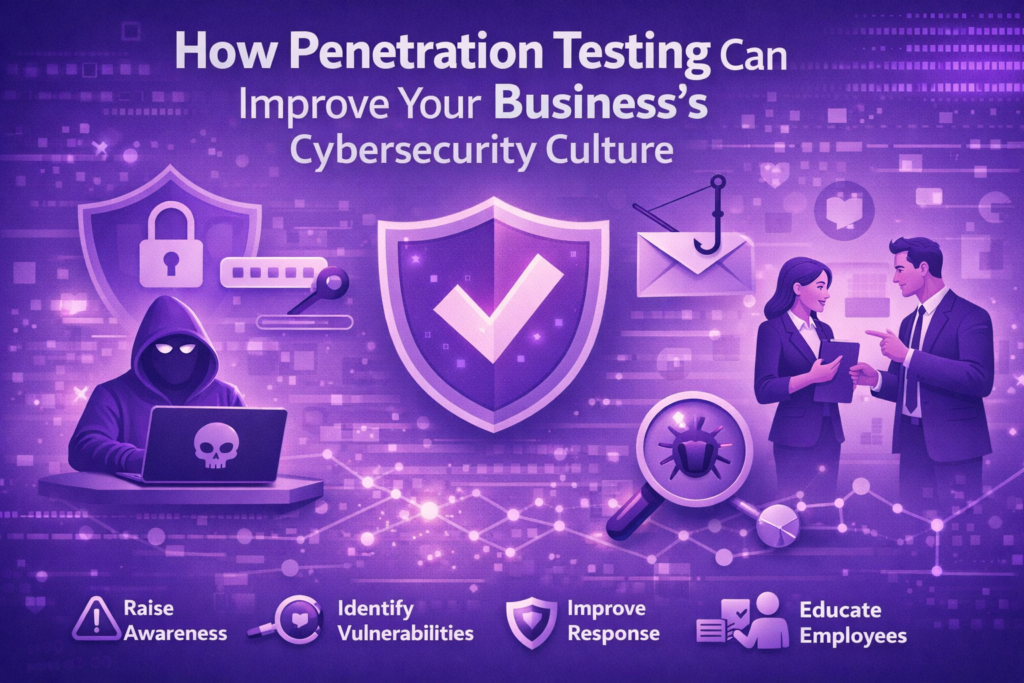
How Penetration Testing Can Improve Your Business’s Cybersecurity Culture

How Penetration Testing Can Improve Your Business’s Cybersecurity Culture In today’s rapidly evolving digital environment, organizations face an increasing number of cyber threats that can compromise sensitive data, disrupt operations, and damage reputations. While advanced security tools and technologies are essential, an often-overlooked factor in cybersecurity success is organizational culture. A strong cybersecurity culture ensures that employees at every level understand the importance of security and actively contribute to protecting company systems and data. One powerful way to build this culture is through penetration testing. What Is Penetration Testing? Penetration testing involves simulating real-world cyberattacks on an organization’s systems, applications, or networks to identify security weaknesses before attackers exploit them. Ethical hackers attempt to breach security controls using the same techniques used by cybercriminals. The findings help businesses understand where vulnerabilities exist and how to fix them before they become serious threats. But penetration testing does more than detect vulnerabilities it also helps organizations build a security-first mindset among employees. How Penetration Testing Strengthens Cybersecurity Culture 1. Raising Cybersecurity Awareness Across the Organization Weak passwords can be cracked quickly Phishing emails can lead to unauthorized access Unsecured devices can expose internal networks 2. Empowering Employees with Practical Security Knowledge Using strong and unique passwords Identifying phishing and social engineering attempts Implementing multi-factor authentication (MFA) Safely handling sensitive business data 3. Encouraging a Proactive Approach to Cybersecurity Outdated software or missing patches Misconfigured systems or open ports Weak authentication processes 4. Improving Incident Response and Team Collaboration Delayed breach detection Inefficient communication during incidents Lack of coordination between departments 5. Promoting Continuous Security Improvement Security requires ongoing monitoring, continuous updates, and employee awareness. Strengthen Your Cybersecurity Culture Partner with Lumiverse Solutions to identify vulnerabilities and build a security-first organization. Contact Us Conclusion Penetration testing is far more than a technical security assessment. It plays a vital role in shaping a strong cybersecurity culture by raising awareness, educating employees, encouraging proactive security practices, improving incident response readiness, and promoting continuous improvement. FAQ What is penetration testing? Penetration testing is a simulated cyberattack conducted by security professionals to identify vulnerabilities. How often should businesses conduct penetration testing? Typically once or twice a year or after major system changes. Why is penetration testing important? It helps identify vulnerabilities and strengthen security defenses. Can it improve employee awareness? Yes, it demonstrates real threats and improves awareness. Recent Posts March 17, 2026 How Penetration Testing Can Improve Your Business’s Cybersecurity Culture March 10, 2026 How Network Security Assessments Saved Businesses from Cyber Attacks March 3, 2026 How Geopolitical Conflicts Increase Cyber Risk for Indian Businesses February 24, 2026 AI Innovation vs Cyber Risk: What Businesses Must Learn from the 2026 AI Summit February 14, 2026 7 Cybersecurity Gaps Regulators Flag During VAPT Audits February 10, 2026 Why Vendor Risk Is the Biggest Compliance Failure in 2026 February 3, 2026 Cybersecurity Compliance in 2026: Why Continuous Audits Have Replaced Annual Checks January 21, 2026 From CSCRF to DPDP: The Growing Link Between Cybersecurity and Data Privacy in 2026 December 12, 2025 SEBI CSCRF Audit: Why You Must Be Ready For 2026 December 6, 2025 Why Every Business Needs a Red Team Assessment | Strengthening Cybersecurity Categories Cyber Security Security Operations Center Cloud Security Case Study Technology Trends Don’t Let Cyber Risks Disrupt Your Business Growth Certified Cybersecurity & Compliance Experts: 12+ years of industry experience delivering VAPT, ISO 27001, SOC 2, and regulatory compliance aligned with global standards. Proven Real-World Cyber Expertise: 850+ cybercrime cases investigated and 1500+ cybersecurity audits conducted across enterprises and regulated industries. Strengthening People, Processes & Technology: 4500+ cybersecurity awareness sessions delivered to reduce human-layer risks and improve organizational cybersecurity. End-to-End Security Partner: From advanced penetration testing to global compliance frameworks, Lumiverse Solutions ensuring businesses stay secure, compliant, and confidently future-ready. Secure. Comply. Scale with Confidence. Book Your free Consultation → India: +91 77986 60940 / +91 7397 882 579 UAE: +971 58 585 6233

How Penetration Testing Can Improve Your Business’s Cybersecurity Culture Read More »

How Network Security Assessments Saved Businesses from Cyber Attacks

How Network Security Assessments Saved Businesses from Cyber Attacks In today’s highly interconnected digital environment, cyber threats are becoming more sophisticated and frequent. Businesses of all sizes face the risk of data breaches, ransomware attacks, financial fraud, and intellectual property theft. A single vulnerability in a network can expose sensitive information, disrupt operations, and cause serious reputational damage. One of the most effective ways organizations can protect themselves is through regular network security assessments. These assessments help identify weaknesses before attackers can exploit them. Below are real-life scenarios that demonstrate how proactive network security assessments helped businesses detect vulnerabilities early and prevent potentially devastating cyber incidents. Case Study 1: Preventing a Data Breach in a Healthcare Company Healthcare organizations manage highly sensitive patient data, making them a prime target for cybercriminals. The Threat A healthcare provider conducted a routine network security assessment and discovered that its firewall configuration was outdated. This flaw exposed the network to ransomware attacks. Cybercriminals were already exploiting similar firewall vulnerabilities across the healthcare sector, encrypting critical patient records and demanding large ransom payments. The Solution Updated firewall configurations Applied security patches to vulnerable systems Implemented strict access control policies Conducted employee training on phishing awareness The Result Data breaches avoided Regulatory fines prevented Operational disruption eliminated Most importantly, they maintained the trust of their patients. Case Study 2: Stopping Financial Fraud in a Retail Chain Retail companies process large volumes of financial transactions, making them attractive targets for cybercriminals. The Threat A retail chain operating multiple outlets noticed suspicious activity within its financial systems. A network security assessment was conducted to investigate the issue. The assessment revealed malware installed on a point-of-sale (POS) system designed to capture customer credit card information during transactions. The Solution Replaced compromised POS terminals Strengthened encryption for payment data Implemented real-time security monitoring Introduced stricter system access controls The Result The rapid response prevented further theft of customer data and stopped the malware from spreading across other systems. The company avoided millions of dollars in potential financial losses and maintained customer confidence. Case Study 3: Protecting Intellectual Property in a Technology Firm The Threat A technology startup performing innovative research conducted a proactive network security assessment. During the assessment, security experts discovered a misconfigured cloud storage system that allowed unauthorized access. The Solution Corrected the cloud storage configuration Implemented multi-factor authentication (MFA) Encrypted sensitive research files Monitored access logs and suspicious activity The Result Unauthorized access attempts were detected and blocked, protecting the company’s intellectual property and competitive advantage. Why Proactive Network Security Assessments Are Essential Identify Vulnerabilities Early Minimize Financial Losses Maintain Regulatory Compliance Build Trust with Customers and Stakeholders Lumiverse Solutions: Your Trusted Cybersecurity Partner At Lumiverse Solutions, we specialize in delivering comprehensive network security assessments tailored to your organization’s unique needs. Identify vulnerabilities in your network infrastructure Simulate real-world cyber attacks Provide actionable remediation recommendations Strengthen your organization’s overall security posture Secure Your Business Today Don’t wait for a breach to happen. Contact Lumiverse Solutions to secure your network and safeguard your business. Book a free consultation – 30 min Frequently Asked Questions What is a network security assessment? A network security assessment is a process used to evaluate a company’s network infrastructure to identify vulnerabilities, security gaps, and potential cyber threats. How often should businesses conduct network security assessments? Organizations should conduct security assessments regularly, typically annually or whenever significant infrastructure changes occur. Why are network security assessments important? They help prevent cyber attacks, protect sensitive data, ensure regulatory compliance, and strengthen overall cybersecurity posture. What industries need network security assessments the most? Industries handling sensitive data such as healthcare, finance, retail, and technology benefit significantly from regular security assessments. Recent Posts March 10, 2026 How Network Security Assessments Saved Businesses from Cyber Attacks March 3, 2026 How Geopolitical Conflicts Increase Cyber Risk for Indian Businesses February 24, 2026 AI Innovation vs Cyber Risk: What Businesses Must Learn from the 2026 AI Summit February 14, 2026 7 Cybersecurity Gaps Regulators Flag During VAPT Audits February 10, 2026 Why Vendor Risk Is the Biggest Compliance Failure in 2026 February 3, 2026 Cybersecurity Compliance in 2026: Why Continuous Audits Have Replaced Annual Checks January 21, 2026 From CSCRF to DPDP: The Growing Link Between Cybersecurity and Data Privacy in 2026 December 12, 2025 SEBI CSCRF Audit: Why You Must Be Ready For 2026 December 6, 2025 Why Every Business Needs a Red Team Assessment | Strengthening Cybersecurity November 27, 2025 What Is IRDAI ISNP Audit? A Simple Guide for Insurers Categories Cyber Security Security Operations Center Cloud Security Case Study Technology Trends Don’t Let Cyber Risks Disrupt Your Business Growth Certified Cybersecurity & Compliance Experts: 12+ years of industry experience delivering VAPT, ISO 27001, SOC 2, and regulatory compliance aligned with global standards. Proven Real-World Cyber Expertise: 850+ cybercrime cases investigated and 1500+ cybersecurity audits conducted across enterprises and regulated industries. Strengthening People, Processes & Technology: 4500+ cybersecurity awareness sessions delivered to reduce human-layer risks and improve organizational cybersecurity. End-to-End Security Partner: From advanced penetration testing to global compliance frameworks, Lumiverse Solutions ensuring businesses stay secure, compliant, and confidently future-ready. Secure. Comply. Scale with Confidence. Book Your free Consultation → India: +91 77986 60940 / +91 7397 882 579 UAE: +971 58 585 6233

How Network Security Assessments Saved Businesses from Cyber Attacks Read More »

How Geopolitical Conflicts Increase Cyber Risk for Indian Businesses

How Geopolitical Conflicts Increase Cyber Risk for Indian Businesses In 2026, cyber risk is no longer driven only by criminal motives. Geopolitical conflicts are reshaping the cybersecurity landscape and Indian businesses are increasingly caught in the crossfire. Global tensions, trade disputes, regional conflicts, and digital warfare tactics are fueling a rise in state-sponsored cyber activity, supply chain disruptions, and targeted cyberattacks. For Indian organizations operating in finance, technology, manufacturing, telecom, and critical infrastructure, understanding this evolving risk is essential. Why Geopolitical Conflicts Translate into Cyber Threats Modern conflicts extend beyond physical borders. Nations now deploy cyber operations to: Disrupt critical infrastructure Steal intellectual property Conduct spying Influence markets Target financial systems Undermine economic stability When tensions escalate globally, cyberattacks often increase in volume and sophistication. Indian businesses with global exposure, foreign partnerships, or cross-border data flows become indirect targets. 1. Rise of State-Sponsored Attacks Geopolitical conflicts often trigger state-backed cyber campaigns. These attacks may target: Banking institutions Energy providers Telecom networks Defense contractors Government-linked enterprises Even private businesses can be targeted if they are part of strategic supply chains. State-sponsored attacks are typically: Highly coordinated Persistent Well-funded Advanced in technique Traditional defenses may not be sufficient. 2. Supply Chain Vulnerabilities Indian businesses increasingly rely on: Global cloud providers International SaaS vendors Offshore development teams Hardware imported from abroad Geopolitical instability can: Compromise vendor security Increase third-party breaches Disrupt critical updates or patches Introduce malware into supply chains Vendor risk governance becomes crucial during global conflicts. 3. Ransomware as a Political Tool In recent years, ransomware attacks have been linked to geopolitical motivations. Attackers may: Target organizations in specific regions Disrupt operations during sensitive periods Leak politically sensitive data Ransomware campaigns may spike during international crises, elections, or sanctions. Indian companies operating globally must anticipate such patterns. 4. Increased Phishing & Disinformation Campaigns Geopolitical conflicts fuel misinformation and social engineering. Attackers exploit: Breaking news events Military tensions Trade sanctions Political announcements Phishing emails disguised as urgent geopolitical updates often bypass employee suspicion. Deepfake technologies further amplify this threat. 5. Regulatory & Compliance Pressure During geopolitical instability, regulators may tighten: Incident reporting timelines Cyber resilience requirements Cross-border data transfer rules Vendor security standards Indian regulators expect businesses to maintain operational resilience regardless of global tensions. Compliance lapses during crises are not excused. 6. Financial Market Targeting Financial institutions and fintech companies face elevated risk during global tensions. Cyberattacks may aim to: Manipulate trading systems Access financial records Cause market disruption Undermine investor confidence Indian BFSI organizations must maintain continuous monitoring and incident readiness. 7. Critical Infrastructure & Strategic Sectors at Risk Energy, telecom, manufacturing, logistics, and healthcare sectors are especially vulnerable during geopolitical conflicts. Disruptions in these sectors can: Affect supply chains Impact national stability Create cascading economic effects Businesses in these sectors must elevate their cybersecurity posture. Why Indian Businesses Cannot Ignore This Risk India’s growing digital economy, expanding global partnerships, and strategic position in international trade make it increasingly visible in the global cyber landscape. Even organizations with no political involvement may face: Collateral cyber damage Indirect vendor compromise Data exfiltration attempts Targeted phishing waves Cyber risk is now influenced by global events beyond corporate control. Preparedness must be continuous. How Businesses Can Strengthen Cyber Security Implement continuous monitoring and SOC capabilities Conduct frequent VAPT and Red Team assessments Strengthen vendor risk management Train employees against social engineering Maintain updated incident response plans Monitor dark web and threat intelligence feeds Align with regulatory cybersecurity frameworks Cyber resilience must be proactive, not reactive. How Lumiverse Solutions Supports Businesses During Heightened Cyber Risk Advanced VAPT & Red Team simulations Continuous SOC monitoring Vendor risk governance frameworks Compliance readiness (SEBI, RBI, DPDP) Dark Web monitoring & threat intelligence Incident response planning & tabletop exercises We help businesses remain resilient even when global uncertainty rises. Conclusion Geopolitical conflicts are no longer distant events; they directly influence cyber risk for Indian businesses. In 2026, cybersecurity strategy must account for global instability, state-sponsored threats, and supply chain exposure. Organizations that adopt proactive, continuous security measures will be better positioned to withstand disruption. Strengthen Your Cyber Resilience Today Assess your geopolitical cyber exposure and build defenses against emerging global threats. Connect with Lumiverse Solutions Recent Posts March 3, 2026 How Geopolitical Conflicts Increase Cyber Risk for Indian Businesses February 24, 2026 AI Innovation vs Cyber Risk: What Businesses Must Learn from the 2026 AI Summit February 14, 2026 7 Cybersecurity Gaps Regulators Flag During VAPT Audits February 10, 2026 Why Vendor Risk Is the Biggest Compliance Failure in 2026 February 3, 2026 Cybersecurity Compliance in 2026: Why Continuous Audits Have Replaced Annual Checks January 21, 2026 From CSCRF to DPDP: The Growing Link Between Cybersecurity and Data Privacy in 2026 December 12, 2025 SEBI CSCRF Audit: Why You Must Be Ready For 2026 Categories Cyber Security Security Operations Center Cloud Security Case Study Technology Trends Don’t Let Cyber Risks Disrupt Your Business Growth Certified Cybersecurity & Compliance Experts: 12+ years of industry experience delivering VAPT, ISO 27001, SOC 2, and regulatory compliance aligned with global standards. Proven Real-World Cyber Expertise: 850+ cybercrime cases investigated and 1500+ cybersecurity audits conducted across enterprises and regulated industries. Strengthening People, Processes & Technology: 4500+ cybersecurity awareness sessions delivered to reduce human-layer risks and improve organizational cybersecurity. End-to-End Security Partner: From advanced penetration testing to global compliance frameworks, Lumiverse Solutions ensuring businesses stay secure, compliant, and confidently future-ready. Secure. Comply. Scale with Confidence. Book Your free Consultation → India: +91 77986 60940 / +91 7397 882 579 UAE: +971 58 585 6233 Tell Us Your Opinion We value your perspective! Share your thoughts, feedback, or questions below. Your opinion matters and helps create a richer, more engaging conversation. Let’s connect and hear what you think about this post!

How Geopolitical Conflicts Increase Cyber Risk for Indian Businesses Read More »